Monday, 15 December 2014

The Tagus Estuary, Lisbon in pictures

Just spend a stupendous four days in the Lisbon area including one day in the Alentejo Region - my favourite part of Portugal. The weather wasn't amazing. Mostly cloudy skies with some rain. Indeed, on our first day it was foggy most of the day.

The most mind-blowing moment was when I witnessed the vast clouds of Glossy Ibis and Greater Flamingo swilling around near Evoa in the Tagus Estuary.

I'll give you more of a breakdown of my trip tomorrow.


 Female Common Stonechat
 Snipe
 Great Bustard
 Eurasian Spoonbill
three of the nine Short-eared Owls in the vicinity

Saturday, 6 December 2014

Serbia 2014 winter owl trip

As you can probably gather, my proposed daily update from the Serbian owl frontier never happened. This was partially down to poor internet but mostly due to being totally knackered by the time we all arrived back at the the hotel in Ecka (pronounced Echka) our base in Northern Serbia near the Hungarian border.
In short, we saw a ton of owls. In four days my group and I easily saw in excess of 1,000 Long-eared Owls. Many of my group had not seen an owl of any description before so I loved seeing their glowing faces!
We wandered around a few small towns urban birding as well as visiting fish farms and open countryside under mostly grey skies with spots of rain on occasion. Despite that and the cold we had an amazing time birding.
 1st winter Caspian Gull
Aside from the owls we also saw a few Caspian Gulls including this confiding bird (above) who posed beautifully displaying its salient identification features including its pink lankey legs, drooped tail-end of its body, largely white head with slooping forehead, pigeon-chest and long, thin-looking black bill.
Collared Doves
I'm already excited about coming back next winter with more people to show them the amazing phenomenon that is the huge numbers of Long-eared Owls that chose to winter in the towns of Northern Serbia.

Trip List
Kikinda and environs, Serbia Nov 30 - Dec 4 2014

Great Cormorant
Pygmy Cormorant
Great Egret
Grey Heron
White Stork
Eurasian Spoonbill
Mute Swan
White-fronted Goose
Greylag
Shelduck
Mallard
Gadwall
Northern Shoveler
Common Teal
Pochard
Ferruginous Duck
Goosander
Pheasant
Marsh Harrier
Hen Harrier
Common Buzzard
Eurasian Sparrowhawk
Common Kestrel
Peregrine
Merlin
Common Coot
Common Crane
Eurasian Curlew
Black-headed Gull
Common Gull
Yellow-legged Gull
Caspian Gull
Wood Pigeon
Collared Dove
Long-eared Owl
Little Owl
Common Kingfisher
Great Spotted Woodpecker
Syrian Woodpecker
Meadow Pipit
Robin
Wren
Black Redstart
Blackbird (heard)
Goldcrest
Great Tit
Blue Tit
Coal Tit
Marsh Tit
Long-tailed Tit
Penduline Tit (heard)
Nuthatch
Common Treecreeper
Magpie
Jackdaw
Rook
Hooded Crow
Raven (heard)
Common Starling
House Sparrow
Tree Sparrow
Chaffinch
Goldfinch
Greenfinch
Bullfinch
Reed Bunting

Monday, 1 December 2014

I really love owls! Day 1 Serbia Long-eared Owl Trip

Day one of my TUB Tours trip to Serbia went very well. Over 750 Long-eared Owls plus a possible Short-eared Owl had my group in raptures.

Other birds seen today and yesterday afternoon included a drake Goosander seen in flight over the Danube in Belgrade (a very scarce bird), Pygmy Cormorant, Sparrowhawk and a Marsh Harrier. There were an unusual large number of Long-eared Owls this winter due to an exceptional breeeding season. The town square in Kikinda, the world's Long-eared Owl capital, was alive with owls. We counted just under 500 birds!


A gaggle of owls in Kikinda

Pygmy Cormorant
Great Spotted Woodpecker

Monday, 17 November 2014

Azores: Rare & Scarce Bird Report 2013

For those of you that know me well it will ring true that I am not much of a twitcher these days. I would rather scout my local patch than eke out a skulking rarity lurking on a remote headland on Fair Isle. I would rather wander the expanses of my patch than to even twitch a local rarity.

Rare birds in the country has the opposite effect on me. Instead of rushing to try and see them, rather, it inspires me to find my own rarity somewhere no one is searching or would have thought to have looked. Rarity hunting within the UK is one thing but for some there is a far more important pinnacle to reach in the search for rarities. It is perhaps the ultimate high for those ultra-serious rarity hunters. The Azores is the capital of rares for the international Western Palearctic twitcher. Every autumn sees a delegation of Western Europe's finest decend upon these nine scattered volcanic islands at the extremety of the Western Palearctic, far from anywhere in the middle of the North Atlantic.

Their quarry? The multitude of American stragglers that turn up without fail. Hence the attraction to the European twitchers who would otherwise struggle to get birds like Upland Sandpiper on their lists. The above-mentioned bird report does what it says on the tin. It's a compilation of rare North American migrants with a few Old World species thrown in for good measure. Even visitations from Canada Geese are included, after all they could well be genuine migrants.

Most of the twitchers visiting the islands make a beeline for Corvo, the smallest and northernmost island of the group. It also has very few accommodation options, so things can get a little cozy at times. I visited the islands some four years ago and absolutely hated the vibe on Corvo. However, a short boat ride away is the island of Flores; a much larger island and much less frequented by birders. Much more my cup of tea. There is a move now to try to attract more international twitchers and birders to cover this island. I think that this is a great idea that sits well with my sensibilities. When I visited Flores I ended up being there for a week and it wasn't long before I was swept up with the rarity hunting. But the great thing was that as a result of there being so few sets of eyes looking for stuff meant that you automatically stood more chance of finding your own birds. Between myself and my three companions we clocked up some marvelous sights like five White-rumped Sandpipers flying around until one was suddenly picked off by a hungry (and gorgeous looking) tundra race Peregrine, replete with buffy tones.

However, I digress. The Azores: Rare & Scarce Bird Report 2013 will serve to whet the appetite of any would be intrepid rarity hunter who can afford the airfare to these beautiful island. If I were you though, don't spend all your time on Corvo. Get off to the other islands and become a FINDER.

For a copy of the report please contact Peter Alfrey: littleoakgroup@btinternet.com

Monday, 10 November 2014

Madrid!

It's not often that I actually go away for an unashamed holiday, a bit of r&r. But that is what I have done for the past five days - spend time chilling and even enjoying cultural highlights!
 Skywatching from the hotel roof
I spent a couple of mornings avidly scanning the skies before breakfast. I was rewarded by passages of low flying finches (mostly Chaffinch), unidentified larks, a few Meadow Pipits, Wood Pigeons with Stock Doves amongst them, a Red Kite, Kestrel, a couple Griffon Vultures, Cormorants and a flock of distant geese. Strolling around the streets also resulted in a fine Peregrine soaring between the office blocks.
 Flamenco star, Sara Baras
I also saw my first ever flamenco theatre production by a dancing genius called Sara Baras. The show was called La Pepa and it was amazing. How she (and the rest of the cast) were able to tap their feet so much for so long was beyond me!
 Real Madrid taking the stage at the Bernabeu Stadium
I also watched Real Madrid (Gareth Bale, Ronaldo et al) put five past neighbours, Rayo Vallecano. The end result was 5-1. Superb atmosphere!

Of course, there was plenty of urban birding to be had in the city's parks.
 Bathing Great Tit
 Iberian Green Woodpecker
 Chiffchaff
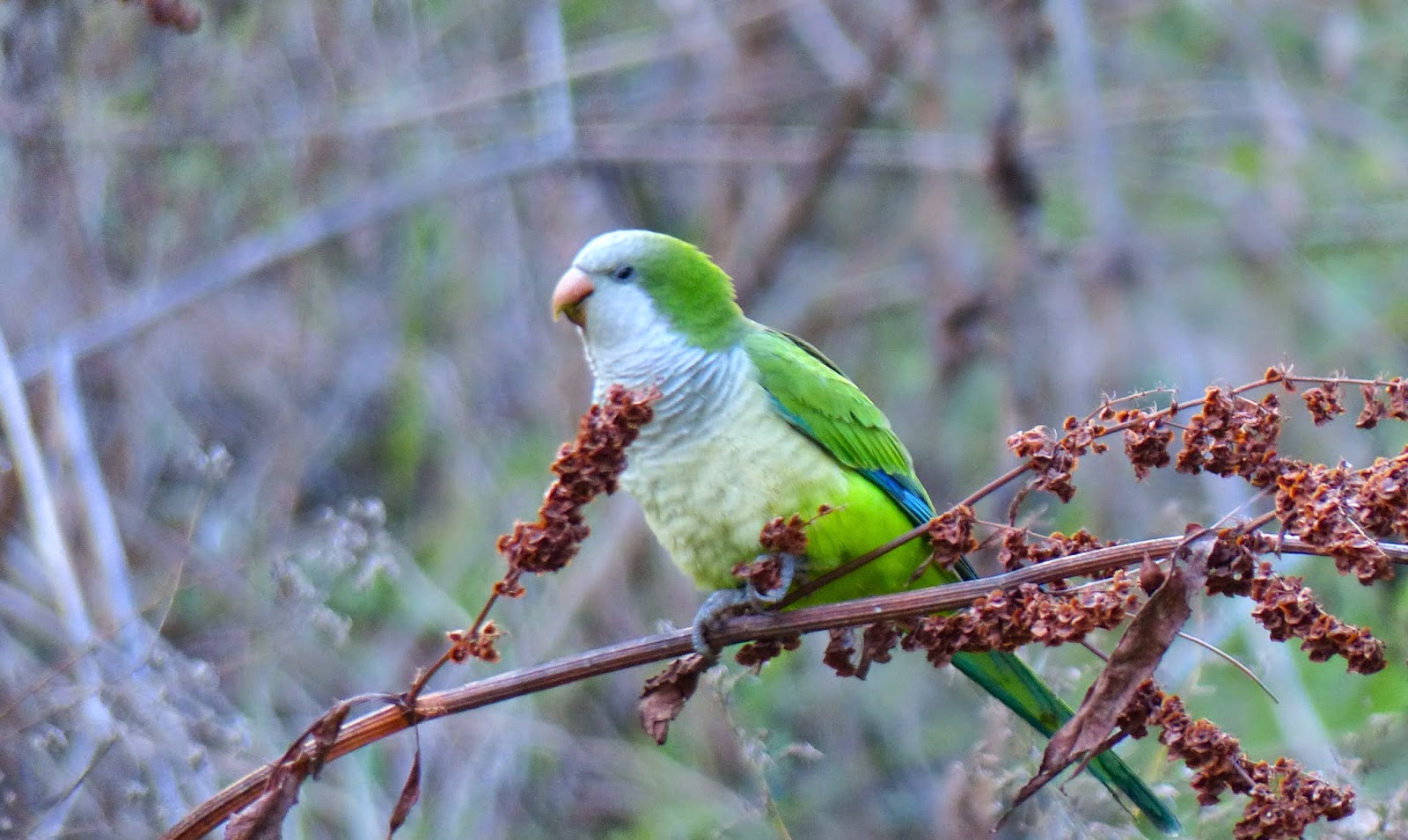
 Monk Parakeet
 Great Spotted Woodpecker
Robin
Meanwhile outside of town in Pastrana, over an hour's drive west of the capital I stayed in a country house enjoying the rural idyll plus clocking Firecrest, Hawfinch, Serin, Cranes, Griffon Vultures, Cetti's Warblers, Blackcaps, Rock Sparrow, Rock Bunting plus....
 Black Redstart
Siskin
A great break was had. Now back to the grindstone...

Sunday, 26 October 2014

Chirpin'!

Had a busy couple weeks recently behind the mic chatting about the virtues of urban birding. It started with a very enjoyable talk at the North Bucks Local RSPB group. It was my second time in front of this group as I also spoke there two years ago. Both occasions were thankfully enjoyed by all.

The next day saw me journeying to Portugal to speak at the ObservaturaNatural in Setubal, a 50 minute drive south from Lisbon. Again, this was my second appearance in as many years. My talk on urban birding in Europe's cities was a hit.


 Images by Vanesa Palacios
Finally, I was honoured to be invited to speak at the RSPB's AGM in Birmingham. It was held in the city's prestigious ICC. The venue itself was a class act. It was fabulous to speak in front of around 500 members. 
Laurence Rose

Sunday, 5 October 2014

Hawfinch!?!

This morning was an amazingly sunny affair, despite the weathermen's warning that summer had come to a close with winter not too far from us. Okay, it was a bit bit chilly at first but by lunchtime I could almost taken my jacket off as the sun's strong rays hit me.

One of the first birds I noticed when I arrived at The Scrubs this morning were two Hawfinches that flew overhead 'ticking' as the went. I caught them in my bins as they headed northeast over the grassland. Their chunky, pot-bellied forms caught my eye as did the distinctive white wingbar that showed from under their wings. They were my first for my patch, first for London and perhaps my third or forth ever in the UK. I was well happy!
 Female Reed Bunting 
I've started teaching a course on Urban Birding at the City Lit College in Covent Garden. My class consists of five women and a guy and today I took them to The Scrubs to teach them about sussing common birds.

Of course, they arrived after my Hawfinches but were present to see at least four Stonechats, at least 12 Jackdaws and best of all 1 Red Kite and at least five Common Buzzards migrating over. They were absolutely delighted!

I love patch birding. I love my patch!
 Starling
A fat Wood Pigeon with a far slimmer Starling